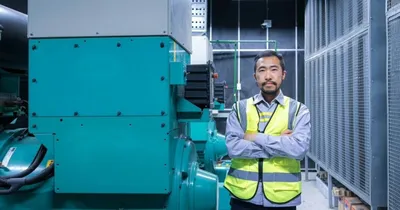
Three grid lessons data centres can't ignore
The Energy Co AU Grid ·
Data centres and how they can be connected to the grid is one of the biggest talking points of the energy sector right now.
40 articles collected
Data centres could unlock Australia's renewables pipeline, but policy headwinds and grid constraints threaten to stall the digital boom before it begins.
Data centres and how they can be connected to the grid is one of the biggest talking points of the energy sector right now.
The Australian Investment Council and Tech Council warned a Senate Inquiry that proposed Capital Gains Tax reforms replacing the 50% discount with an indexation model will penalize long-term climate tech R&D. Industry leaders argue the shift to a 30% minimum rate disproportionately impacts equipment-heavy startups with low cost bases, potentially doubling tax liabilities for venture investors.

Chinese electric truck company Windrose Electric secures approval for its electric prime mover, one of the last steps before the truck can go on sale in Australia.
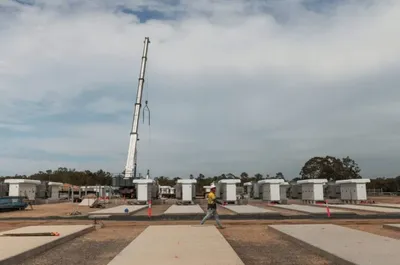
The NSW Energy Security Corporation has deployed its first investment, committing AU$100 million to a large-scale battery storage platform.

A new report suggests data centres may resolve renewable energy demand shortages and financing gaps, though the sector faces its own developmental hurdles. These facilities could provide the necessary long-term contracts to secure financial backing for new green energy projects across Australia.
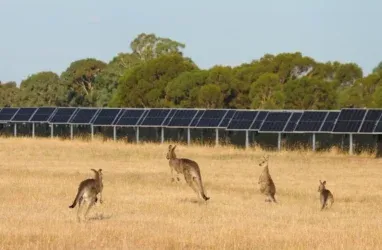
Neoen Australia has urged the federal government to restrict Capacity Investment Scheme (CIS) contract awards to shovel-ready developments. The developer argues this policy shift is necessary to accelerate project delivery and ensure the national 80% renewable energy target is achieved by 2030.
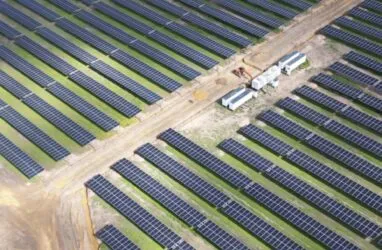
Global power capacity additions are now dominated by renewable energy, with solar, wind, and battery storage installations creating a massive gap over the minimal remaining fossil fuel expansion. This shift highlights the accelerating displacement of coal and gas by green technologies in the international energy mix.
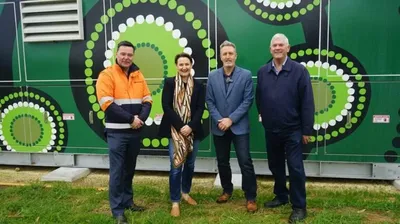
Western Power has started construction on 18 community battery energy storage systems across Perth and Bunbury in Western Australia.
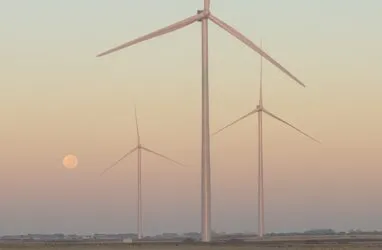
The Victorian Farmers Federation has endorsed new voluntary best-practice standards for renewable energy developers to improve transparency and cross-sector coordination. While the guidelines aim to enhance community engagement for wind, solar, and battery projects, agricultural stakeholders caution that the non-binding nature of the rules may limit their effectiveness.
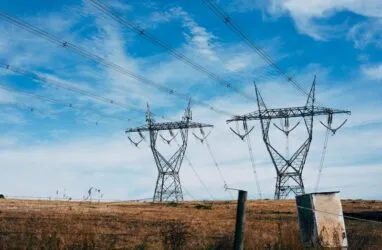
The Australian Energy Market Commission (AEMC) faces criticism over its approach to network tariff structures, with analysts questioning the logic of applying retail-style pricing models to essential grid infrastructure costs.
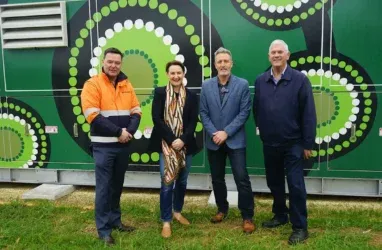
Federal and state governments back rollout of 18 community batteries on parts of the grid with particularly high rooftop solar uptake.

A new land access agreement between Traditional Owners of the Pilbara region and iron ore giant Fortescue will see the two parties collaborate on decarbonisation of mining operations on Country.
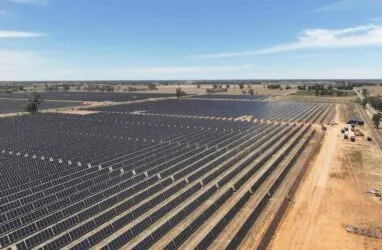
Australia's superannuation sector could be missing its chance to own the nation's green energy future, but the super industry says it's well invested.
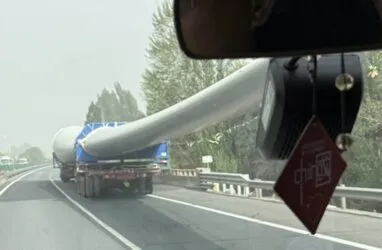
Updated: In China, they deliver wind turbine blades in convoy to project sites. It must be much lower cost than in Australia, where blades are moved piece by piece, with police escorts.

A recurring misconception about electrifying apartments is that the building can’t support induction cooktops. But the switch is more straightforward than most expect.
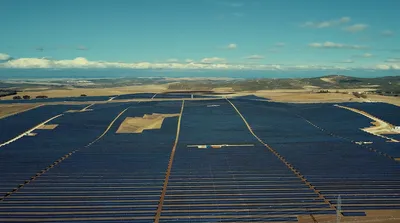
An Ember report indicates Spanish renewables reduced household costs by €10 monthly during the recent energy crisis, with gas-fired generation setting electricity prices during only 9% of hours. This high green energy penetration effectively insulated the domestic market from broader European gas price volatility.

The European Commission is restricting funding for solar projects utilizing high-risk inverter vendors to bolster strategic independence. Cybersecurity expert Uri Sadot argues that while these bans address geopolitical concerns, the industry requires standardized technical regulations, enhanced asset visibility, and NIS2 implementation to effectively mitigate systemic digital vulnerabilities.

Battery manufacturer AESC and system integrator Prevalon Energy have established a strategic supply agreement for 10GWh of battery cells and modules. The partnership focuses on delivering energy storage components produced within the United States to meet domestic content requirements.
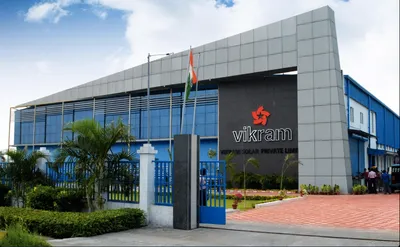
Vikram Solar is simultaneously expanding its module manufacturing capacity from 9.5 GW to 15.5 GW, with the additional capacity expected to be commissioned by the first quarter of fiscal year 2027.
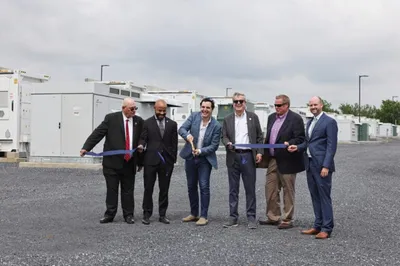
Cypress Creek Renewables secured $3.5 billion in financing to support a gigawatt-scale hybrid project pipeline, while Virginia's largest standalone battery storage facility commenced operations. Additionally, Kore Power divested its mobile battery solutions subsidiary to focus on core manufacturing and stationary storage.
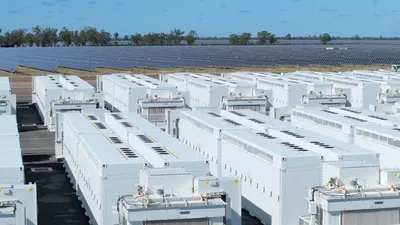
OMV Petrom has announced a final investment decision for the Gabare solar energy and battery storage project in Bulgaria.

Ontario’s Independent Electricity System Operator has contracted 640MW of fresh capacity across three energy storage projects via the LT2 Request for Proposals capacity stream. This procurement aims to bolster the Canadian province's grid reliability through newly secured long-term storage assets.
Malaysia is poised to exceed its National Energy Policy’s (NEP) 2040 renewable energy capacity target of 18.43GW by 2031.
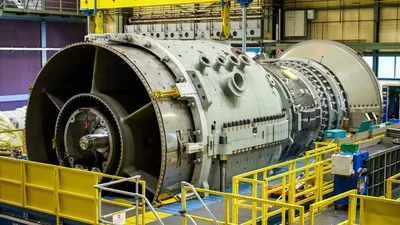
Siemens Energy has been selected to provide gas and steam turbine technology for the 2.6GW Taweelah C Independent Power Producer (IPP) project located in Abu Dhabi, UAE.
The European Commission has granted approval for the creation of a joint venture between TotalEnergies, and Masdar.
Ocean Winds, a joint venture between EDP Renewables and ENGIE, has completed the installation of the first wind turbine at the 500MW Dieppe Le Tréport offshore wind farm (EMDT), located off the coasts of Le Tréport and Dieppe, France.
SMRs are set to play a key role in cutting carbon emissions, and supporting the transition to a low-carbon economy across the globe.
Welsh Rugby Union claims stadium array is largest installed on a UK sports venue to date, with generating capacity to power more than 50 matchdays. Historic horse racing venue Ascot also adds solar as part of broader sustainability drive.
UK government reportedly planning to weaken its EV mandate, which currently requires 80 per cent of all new cars sold in the UK to be electric by 2030
Energy Dome is advancing a 10-hour CO2 Battery project in Arizona, with SRP and Google, while Invinity announces the sale of North America’s largest VRFB, in California.
Statkraft to build the Blåfjell Pump, a new facility that will transfer more water into Blåsjø, Norway’s largest hydropower reservoir
The commissioning of the first phase of a planned 1.9 GW solar project represents Kyrgyzstan’s largest operational solar site to date.
Accelerating AI and cloud computing are rapidly reshaping the power sector, driving a surge in global data centre power demand.
A Chinese research team has developed a scene-aware panel surface temperature (PST) retrieval model for utility-scale photovoltaic (PV) plants using MODIS thermal infrared satellite data.
With digital monitoring & SF₆-free designs gaining traction, the HV switchgear market is forecast to expand quickly through 2030.
Videberg Kraft has selected Rolls-Royce SMR as the preferred supplier for Sweden’s first new nuclear build in more than 40 years.
Solarge is a Dutch manufacturer that produces ultra-lightweight, fully recyclable solar modules at an automated plant in Weert, in the southern Netherlands.
UtmoLight unveiled its Chuangshi S2 and S1 perovskite modules at SNEC 2026, targeting durability and lightweight deployment challenges that have limited commercial adoption of perovskite PV.
China has proposed a PV product grading system that classifies modules into three quality tiers based on reliability, performance, and environmental attributes.
The RP17AY system is a variable-speed, inverter-driven air-source heat pump using R-454B refrigerant, designed for universal replacement applications with high seasonal efficiency.
The same briefing, in your inbox each morning. Australian energy news, market signals, and policy. No noise.
No spam. Unsubscribe anytime. Choose exactly what you receive
You're subscribed to the daily brief.
Almost there. Check your inbox for the confirmation link.