NSW planning not ready for data centre boom
The Energy Co AU Grid ·
A New South Wales Parliamentary inquiry has received submissions warning that the state's planning framework is ill-equipped for a surge in data centre energy requests.
46 articles collected
A New South Wales Parliamentary inquiry has received submissions warning that the state's planning framework is ill-equipped for a surge in data centre energy requests.
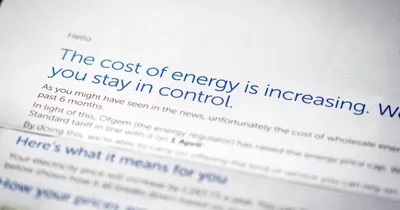
Two weeks ago the war-induced spike in global liquefied natural gas prices hadn't had much of an impact on either domestic gas prices or electricity futures prices.
The Clean Energy Finance Corporation has committed $100 million to provide discounted loans for Volkswagen electric vehicles, offering interest rate cuts of up to 1% for passenger and light commercial models. This follows a $60 million initiative for Hyundai and KIA, aiming to lower upfront costs for small businesses and support grid integration through vehicle-to-grid technology.
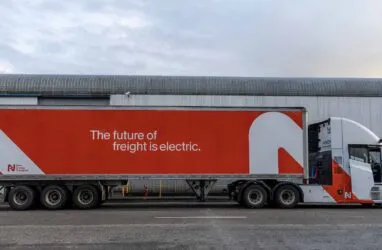
Australian electric truck adoption remains constrained by federal policy inertia despite the technology reaching cost-competitiveness with diesel alternatives. Industry advocates are urging the Transport Minister to implement supportive frameworks to accelerate the transition and capitalise on current decarbonisation opportunities within the heavy vehicle sector.
Energy security expert John Blackburn warns of potential fossil fuel rationing due to Australia's lack of preparation for current supply crises. The discussion highlights surging electric vehicle sales and the emergence of electric trucks as critical alternatives to traditional transport fuel dependencies.
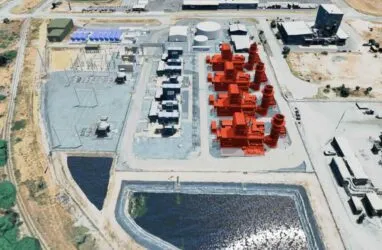
AGL Energy has reached a final investment decision on a new peaking power station, which is expected to recover its capital costs within eight years. The project's financial viability is supported by capacity-style returns, potentially achieving profitability even with minimal operational dispatch.
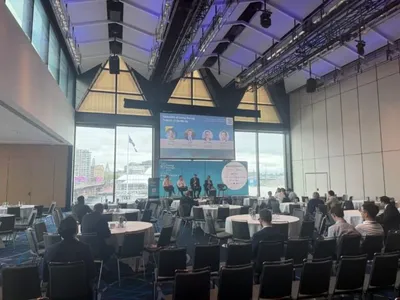
Australian battery lenders are tightening financing requirements for a 15GW project pipeline as arbitrage spreads drop to $100/MWh. Financial institutions now typically require 50% to 70% of revenue to be contracted to mitigate rising merchant risk and increased market volatility.

The New South Wales government has allocated $180 million for road network improvements to facilitate the transport of oversize wind turbine components, including towers and blades. These infrastructure upgrades aim to resolve logistical bottlenecks for large-scale renewable energy projects across the state.
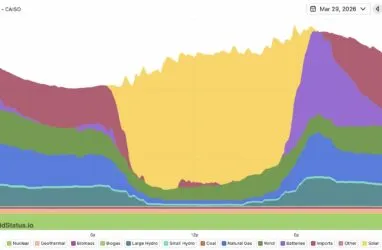
Battery storage in California reached a record peak by supplying 44% of evening electricity demand, significantly displacing gas generation in the world's fourth-largest economy.
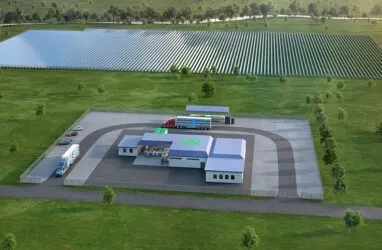
Edify Energy has withdrawn its ARENA-supported green hydrogen project from the federal environmental assessment process. The proposal was intended to anchor a large-scale renewable energy hub powered by wind and solar generation.
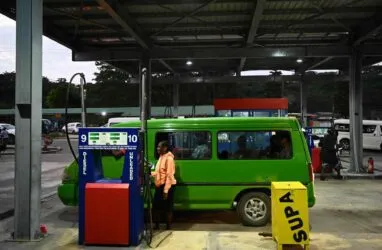
Escalating global oil prices have intensified energy insecurity across Pacific Island nations, with one country's fuel import costs now tripling its total healthcare expenditure. This financial strain is accelerating a regional transition toward renewable energy to reduce heavy reliance on volatile international fossil fuel markets.
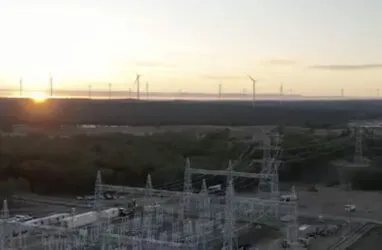
Queensland's state-owned transmission operator, Powerlink, has proposed a 45% increase in revenue collection from consumers to manage rising operational complexities. This requested hike in the network's revenue base directly contradicts recent Queensland government claims regarding the reduction of household electricity costs.
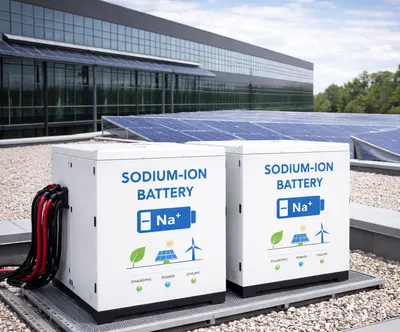
France’s Association Environnement Juste has proposed a storage mandate for renewables projects exceeding 10 kWp in order to integrate flexibility at the source.
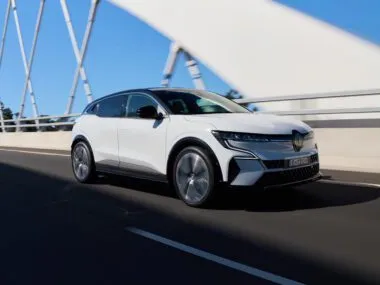
Renault has discounted its Megane E-Tech electric SUV to a drive-away price of $49,990 for Australian buyers. This promotional pricing for the battery-powered hatchback crossover is scheduled to remain available until June 30, 2024.

Consultancy TBH proposes integrating data centres as collaborative hubs for shared energy and water infrastructure to mitigate their heavy grid demand. Director Rob Hammond suggests this shift from isolated high-intensity loads is essential for the sustainable expansion of the sector.

Germany’s Federal Network Agency, Bundesnetzagentur, plans to unveil a new grid fee framework in May 2026. The upcoming regulations will address how network charges integrate with flexible connection contracts to influence the financial performance of battery energy storage systems.

The European Investment Bank has authorised a €60 million framework loan to finance grid operations and support the energy transition in Andorra.
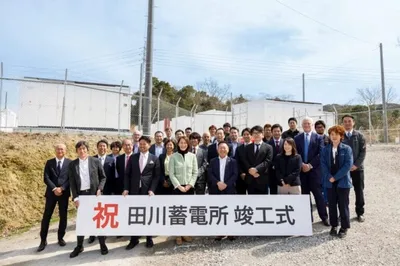
Hexa Energy Services has commissioned a battery energy storage system in Japan, marking the first operational project to secure a contract under the nation's capacity market framework.
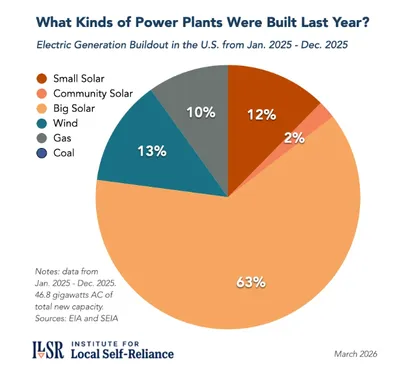
Small-scale solar installations in the United States reached a record 1.9 GW during the final quarter of 2025. This growth in residential and community projects resulted in distributed solar representing 15% of the nation's total new electricity generation capacity for the year.
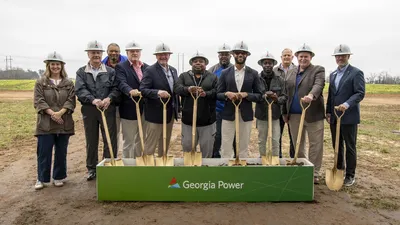
Georgia Power has started building a 260MW battery energy storage system in Jefferson County, Georgia. Located near Wadley, the project represents a significant addition to the utility's regional storage capacity.
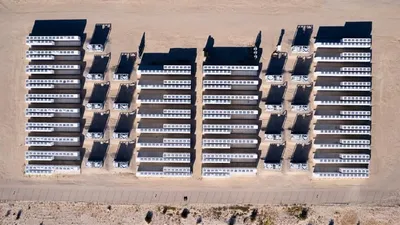
Advantage Capital has finalized a $158 million tax equity investment to fund the 250 MW Medway Grid battery energy storage facility. This capital injection supports the development of large-scale storage capacity essential for grid stability.
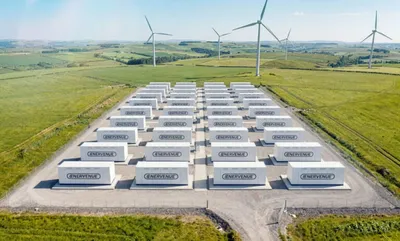
EnerVenue has secured US$300 million in Series B funding to scale production of its nickel-hydrogen battery technology. The company intends to manufacture stationary storage systems capable of 30,000 cycles, leveraging technology originally developed for aerospace applications.
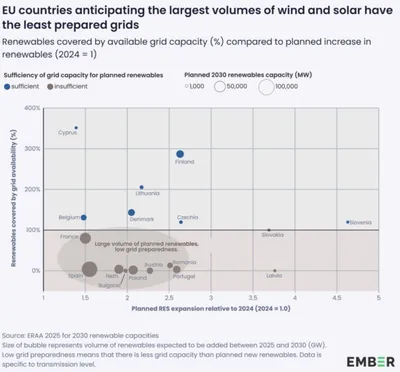
Ember analysis indicates that transmission and distribution network constraints across Europe are jeopardising 120 GW of intended renewable energy capacity. These infrastructure bottlenecks impact the feasibility of both large-scale utility projects and smaller residential solar installations in the most affected nations.
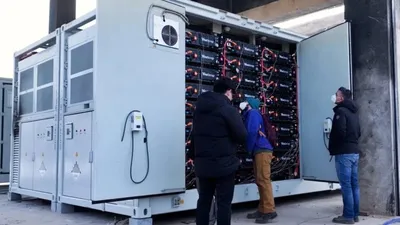
The sixth edition of the UL9540A safety standard for battery energy storage systems introduces a transition toward comprehensive system-level evaluation. Developed by CSA Group, these updated protocols refine how thermal runaway fire propagation is tested and documented across the global BESS industry.

Abu Dhabi authorities have expanded a solar self-supply policy to include residential properties, following an initial rollout for the agricultural industry in February. This regulatory change allows homeowners in the UAE capital to generate and consume their own solar power.
Australian electric vehicle registrations jumped 50% in March as record-high petrol prices drove consumer demand to unprecedented levels. This surge reflects a significant shift in buyer behavior as motorists seek alternatives to volatile liquid fuel costs.
Quebec has initiated construction on Des Neiges wind farm located northeast of the city, representing an investment of about C$3bn ($2.1bn).
Harmony Energy has commenced construction on a 100MW/200MWh battery energy storage system in France. This project marks the developer-operator's third utility-scale storage facility to reach the building phase within the French market.
SolarEdge has outlined a transition pathway to integrated 800 V (DC) infrastructure for data centers, arguing that legacy alternating current (AC) systems introduce inefficiencies that could constrain the growth of AI workloads.
European Energy has finalized the divestment of its 470MW Jonava renewable energy development to Energix - Renewable Energies.
Toyota plans to launch a battery-electric version of its Hilux utility vehicle in Australia following three years of testing. The upcoming model is expected to feature a restricted driving range compared to traditional internal combustion engine variants.
GAC has launched the Aion UT electric hatchback, priced at $31,990, targeting the entry-level segment of the Australian EV market. The vehicle aims to compete on affordability while offering a comprehensive feature set for a compact model.
Cornell University researchers found that tracking solar panels in agrivoltaic configurations can reduce wind speeds by up to 86% during extreme weather, offering superior crop protection compared to traditional tree windbreaks. The study proposes a specialized design featuring a lowered first row of panels to optimize airflow and shield agricultural yields from wind damage.
Industry stakeholders at the Battery Business & Development Forum 2026 analyzed the divergent financial evaluation criteria used by investors and developers when comparing standalone energy storage assets against co-located projects.
RenewEconomy argues that assertions regarding solar and battery owners shifting grid costs to non-solar households are exaggerated and fail to address the underlying causes of energy system inequality.
Italian energy stakeholders are evaluating future grid-scale battery storage investment frameworks following the conclusion of the initial MACSE auction mechanism. Industry discussions at the Energy Storage Summit 2026 focused on identifying sustainable commercial pathways for BESS deployment as the market transitions beyond this primary procurement scheme.
ClearVue Technologies has obtained International Electrotechnical Commission certification for its metal-backed building-integrated photovoltaic rooftop panels. This regulatory milestone enables the company to progress toward the commercial sale and installation of the integrated solar system.
German firm Sassmann has launched a modular grid system designed to block pigeons from nesting under solar panels. The hardware aims to protect photovoltaic installations from damage and efficiency losses caused by bird activity.
Chilean Energy Minister Ximena Rincón advocated for accelerated investment in renewable energy, battery storage, and electrification infrastructure at the RE+ Southern Cone Summit. The minister emphasized a proactive strategy to decrease the nation's dependence on fossil fuels through enhanced grid capabilities.
Rising diesel prices and the availability of government battery rebates are driving increased interest in home electrification and energy storage among Australian demographics previously resistant to the technology.
Researchers in India demonstrated that ion beam implantation enables precise boron doping in silicon solar cells, reducing defects and improving charge transport.
SP Energy Networks has commenced a £12 billion, five-year initiative to upgrade Scotland's electricity infrastructure. The programme focuses on modernising the regional grid to support evolving energy demands through 2029.
German manufacturer Solar Fabrik has released a 400 W red-brown glass-glass solar module featuring 20.02% efficiency. The product is specifically designed to blend with traditional tiled rooftops on heritage-listed and architecturally sensitive buildings.
Solbian has released a marine solar solution featuring 80 W and 108 W kits designed for installation on boat davits. Utilizing SunPower Maxeon cells, the hardware is rated to withstand wind speeds of 25 m/s and targets the utilization of previously unoccupied maritime surfaces.
German researchers analyzing online news sentiment found that public perception of heat pumps remains generally positive but highly volatile. Sentiment experienced a sharp decline during the 2023 legislative debates regarding Germany’s heating laws, indicating that policy disputes significantly destabilize technology acceptance.
Copenhagen has finalised its transition to a fully electric bus network following the deployment of battery-powered vehicles on its final two routes. The Danish capital’s public transport system, including its highest-traffic lines, now operates without internal combustion engines.
The same briefing, in your inbox each morning. Australian energy news, market signals, and policy. No noise.
No spam. Unsubscribe anytime. Choose exactly what you receive
You're subscribed to the daily brief.
Almost there. Check your inbox for the confirmation link.