Emissions policy review to set offset rules beyond 2030
The government has asked for industry input around the use of carbon offsets and how many facilities the safeguard mechanism (SM) should cover, as it sets new rules for the scheme.
37 articles collected
Energy ministers have overhauled AEMO's governance structure, removing industry members, as Canberra opens a review into the Safeguard Mechanism's post-2030 design.
The government has asked for industry input around the use of carbon offsets and how many facilities the safeguard mechanism (SM) should cover, as it sets new rules for the scheme.

Energy ministers have endorsed reforms to the Australian Energy Market Operator following the Nigel Ray review, transitioning the body to 100% government membership by removing industry stakeholders. While AEMO retains its corporate status and ISP development role, new statutory duties to inform and updated board skill requirements aim to enhance accountability and transparency.
The Malaysian government has rubber-stamped 20 data centres since launching a strict new regime last October forcing developers to provide their own renewable energy, pay higher electricity tariffs and shoulder network connection fees upfront.
The belated surge in electric vehicle sales in Australia is unambiguously welcome news.
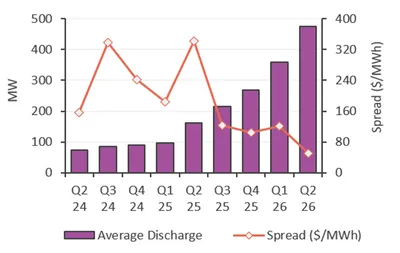
Utility-scale battery operators can mitigate spot price volatility by utilizing intraday time block derivatives to secure spreads between midday and evening peak periods. This hedging strategy allows developers to establish revenue baselines for financial modeling, investment approvals, and competitive bidding in government support schemes.
An independent review recommends the Australian Energy Market Operator retain its long-term planning functions while divesting its investment-focused subsidiary, Australian Settlement Limited. The findings reject a major governance overhaul, maintaining the current institutional structure for market oversight.
The federal government’s green bank has closed the books on another record-setting year, including finance to help break Australia’s wind drought and to build the first stage of Marinus Link.
The Australian Renewable Energy Agency (ARENA) is funding ElectraLith to develop a pilot plant for a novel lithium refining technology. This process aims to eliminate chemical and water use while operating entirely on renewable energy to achieve higher cost efficiencies.
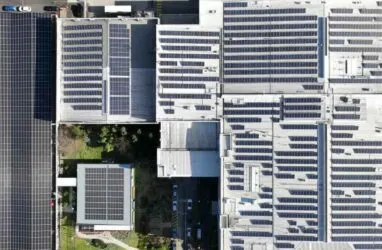
Nearly a week after federal Labor announced plans to expand the SRES, industry is still buzzing with the promise of "insane" new demand. But a few warnings and caveats are starting to emerge, too.
Advocates are calling for national regulations requiring new data centres to procure additional renewable energy capacity to prevent increased reliance on gas generation and rising national emissions.
Major battery proposed for centre of Sydney gets development approval from independent panel, after being sent there by protests from far-flung regional towns and interstate.
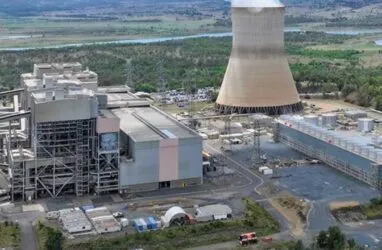
State owned utility faces $1 billion lawsuit, accused of withholding incidents, safety warnings at troubled coal generator from joint venture partner.
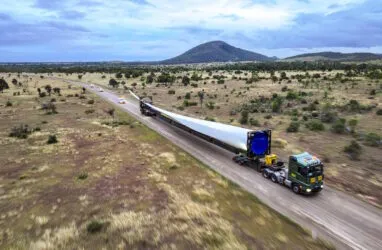
Wind turbine blades bound for state's only wind farm currently under construction are winding their way through the Hunter region, from port to project site.
Huge 75-tonne mining trucks are the first in the world to be powered by sodium-ion battery packs.
The world’s largest battery-electric ship departed Tasmania last week, beginning its long journey to South America aboard mammoth heavy lift vessel
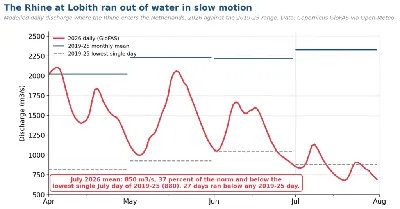
River-flow, generation and price data from April to July 2026 point to a drought corridor stretching from the Rhine delta to the lower Danube.
France will expand its renewable curtailment mechanism to more solar and wind installations, lowering the capacity threshold from 10 MW to 1 MW in two stages from December 2026.
The Welsh Government has granted Section 36 Consent for the 200MW Llŷr Wind Farm, marking the first major offshore wind project to receive approval under the new administration.
Energy Vault has secured a commercial contract to provide a 1.25GW integrated power platform for a hyperscale artificial intelligence data centre. The project involves deploying the company's proprietary energy storage and management technology to meet the high-capacity electricity demands of the facility.
The Swiss government has overturned a prohibition on constructing new nuclear power facilities to bolster long-term energy security. While nuclear options are re-evaluated, Switzerland intends to prioritize the rapid expansion of solar PV capacity as its primary generation growth strategy through 2035.
Bangladesh has reinstated payment guarantees for renewable energy projects to boost investor confidence and attract local and international financing.
Avantus has closed a US$1.05 billion corporate credit facility to support the company’s IPP strategy and accelerate development of its solar and energy storage portfolio.
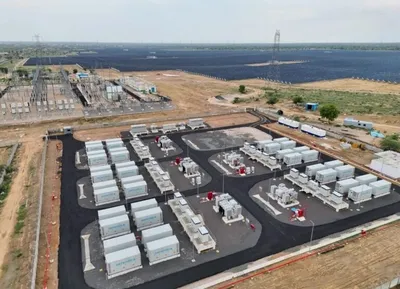
Serentica Renewables has commissioned the first phase of a battery storage project that will help deliver round-the-clock (RTC) renewable energy in Rajasthan, India.
Sumitomo has acquired a 33.3% equity stake in the Gwynt Glas Offshore Wind Farm, which is being developed by EDF power solutions UK and Ireland and Electricity Supply Board (ESB) in the Celtic Sea, off the coast of the UK.
European transmission system operators are preparing for the August 12 solar eclipse, which is expected to temporarily reduce photovoltaic generation but pose no threat to electricity supply.
Chinese researchers have developed a zinc oxide thin-film coating for heterojunction solar cells that functions as a UV shield to minimize degradation. This application is projected to increase cumulative power generation by 4.8% over a 25-year lifespan while lowering the levelized cost of energy.
Samsung and Oak Ridge National Laboratory are testing a cold-climate vapor-compression heat pump designed to maintain stable heating performance below −30 C.
Sembcorp has secured conditional approval from Singapore’s EMA to proceed with a 300MW renewable power import project.
The Deep Orange 17 is an electric vehicle prototype designed to generate more energy than it consumes during a typical day of urban commuting.
South Korea has designated the initial participants for its Sunshine Income Villages program, a resident-led initiative designed to distribute profits from local solar installations among community members.
The Czech Republic is prioritizing a significant expansion of its nuclear power capacity to meet national decarbonization targets. While the strategy aims to secure long-term clean energy, analysis from GlobalData indicates the transition carries substantial implementation risks.
The Italian government has finalized the FerX mechanism, setting a 10 GW quota for PV projects and a reference strike price of €80/MWh, with premiums for floating and asbestos-roof replacement projects.
Mitsubishi is returning to the Australian EV market with the ASX VR-e electric SUV, due to arrive in four variants before the end of 2026.
In this news roundup, ACCURE, Hydrostor, Shoals and TerraFlow, and Qnetic claim significant advances in and for energy storage technology.
An international team of scientists has reviewed recent advances in sodium-ion battery components, highlighting their potential as a lower-cost, more sustainable alternative to lithium-ion batteries.
A landmark privately-funded ultra-fast EV charger goes live, and raises questions why government authorities can't achieve the same success.
Sam and Sarah unpack the latest electric vehicle from Subaru to hit Australian shores.
The same briefing, in your inbox each morning. Australian energy news, market signals, and policy. No noise.
No spam. Unsubscribe anytime. Choose exactly what you receive
You're subscribed to the daily brief.
Almost there. Check your inbox for the confirmation link.