How to optimise land-use planning for energy projects
The Energy Co AU Policy ·
If it is to meet its 2030 renewable energy targets, Australia needs to build renewable energy infrastructure at unprecedented scale and pace.
37 articles collected
Quinbrook's Supernode becomes the NEM's largest battery, but collapsing price spreads and diesel-fuelled price spikes in SA reveal the growing pains of Australia's storage boom.
If it is to meet its 2030 renewable energy targets, Australia needs to build renewable energy infrastructure at unprecedented scale and pace.
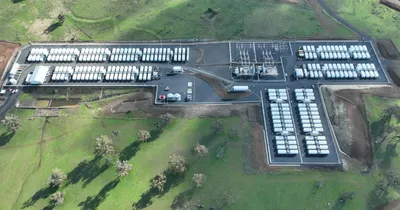
Utility-scale battery developers like Akaysha Energy remain confident in project viability despite 13GWh of residential storage capacity potentially narrowing price spreads. While AEMO forecasts 36GW of grid-scale storage by 2030 to meet rising demand, firms are evolving contracting structures to manage merchant risks as small-scale capacity rivals the current 4.8GW of NEM grid batteries.
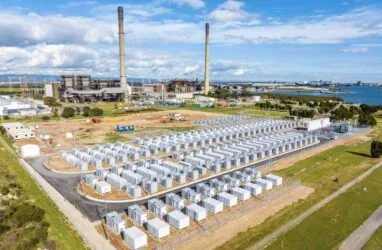
South Australia's electricity market is experiencing extreme price volatility during peak demand periods as diesel generators fill supply gaps when battery storage capacity is exhausted. These spikes occur during both heatwaves and cold snaps, highlighting ongoing reliability challenges despite the state's high renewable energy penetration.
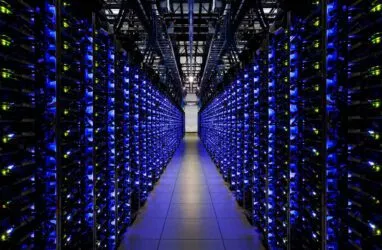
Queensland and the Northern Territory are prioritising gas-fired generation for data centres, diverging from New South Wales and federal preferences for renewable energy mandates. Despite this regional shift toward fossil fuels, major data operators indicate they can meet proposed clean energy requirements for their facilities.
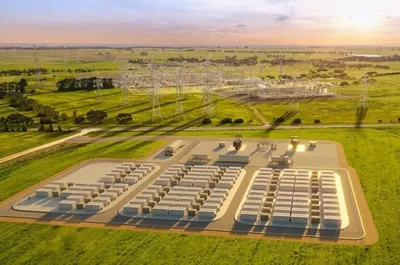
Average battery price spreads across the National Electricity Market plummeted 85% year-on-year to $51/MWh in Q2 2026. This volatility compression occurred as Australia's total grid-scale battery storage capacity surpassed the 9,000MW milestone.
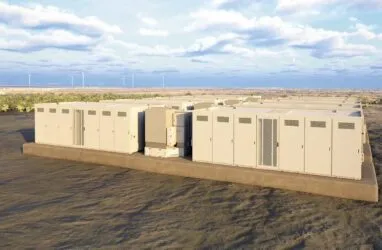
Neoen is expanding its Goyder South battery in South Australia to 400 MW / 800 MWh, doubling the project's initial capacity. The facility has secured firming agreements with the South Australian government and a supply contract with BHP to support the Olympic Dam mine.
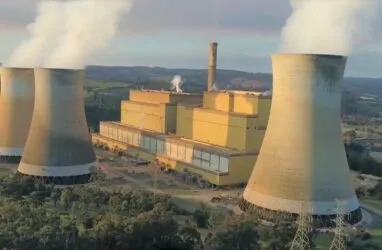
Ambiguous retirement timelines for Australian coal plants are obstructing the investment required for replacement wind and solar capacity. EnergyAustralia's Yallourn station is now viewed as a critical test case for whether the industry can successfully manage fossil fuel exits without disrupting the broader energy transition.
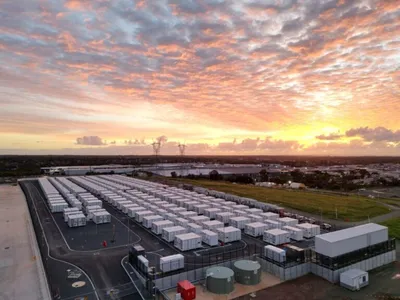
Quinbrook Infrastructure Partners has launched commercial operations at the 250 MW / 500 MWh Stage 1 of its Supernode battery project in Brendale, Queensland. Now the largest operational BESS in the National Electricity Market, the facility provides essential firming services and grid stability through a long-term offtake agreement with Origin Energy.
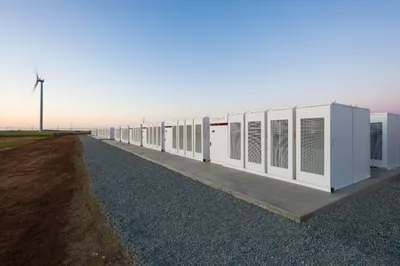
Neoen Australia has started building a 227MW/907MWh grid-forming battery energy storage system in South Australia, marking the commencement of a significant four-hour duration storage project for the state's network.
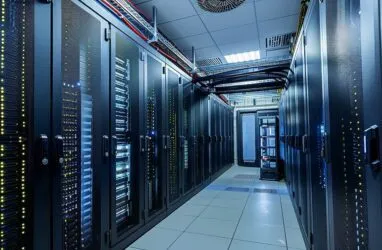
Coalition-led states and territories are resisting a proposed federal and Labor-state mandate requiring data centres to secure their own renewable energy supplies. The policy aims to mitigate the grid impact of rapid digital infrastructure growth, but jurisdictional opposition threatens a unified national approach to managing data centre load.
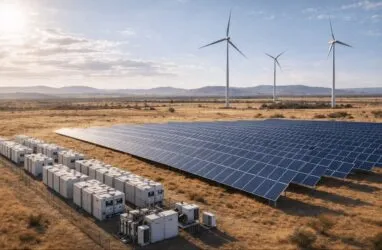
Australia's dual strategy of pursuing renewable energy leadership while maintaining fossil fuel exports is shifting from a perceived economic hedge to a strategic liability. This tension threatens the nation's transition toward becoming a reliable green energy exporter in a decarbonising global market.
Trump administration unveils bans that target imports of new Chinese robots and power inverters, seeking to protect US from national security threats. What are the implications for Australia?
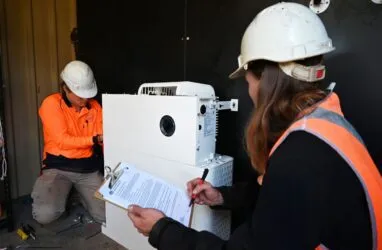
The Cheaper Home Batteries scheme is on track to notch up half a million installations in August, according to the latest tally, as the hugely successful federal government rebate continues to defy all expectations.
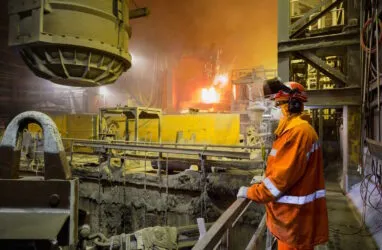
A major aluminium smelter, which has a quickly approaching deadline to lock-in a long-term electricity deal, won't be able to rely on green credit help.
Village Power's eight-year journey to install a community battery exposes the barriers facing community-led energy.
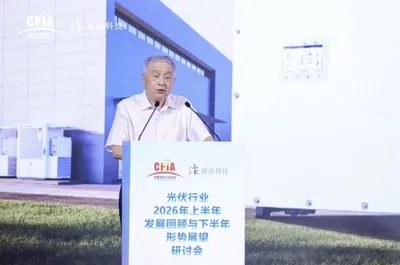
The China Photovoltaic Industry Association says domestic installations are returning to more sustainable levels but expects both China’s market and global PV additions to shrink in 2026.
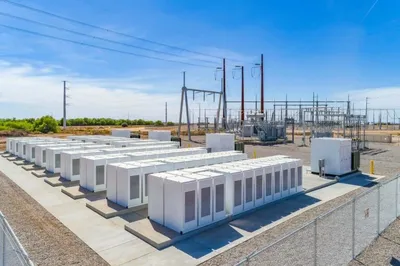
NextEra Energy reported a 9.5% rise in Q2 2026 net earnings while progressing a merger with Dominion Energy to establish the largest regulated power utility globally. CEO John Ketchum identified battery storage as a primary growth catalyst for the combined entity.
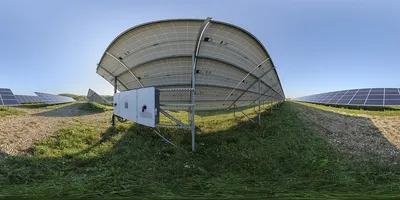
The US Federal Communications Commission has immediately prohibited equipment authorizations for foreign-manufactured solar power inverters by adding them to its Covered List. This regulatory ban addresses national security risks and potential hacking vulnerabilities associated with unapproved international hardware models.

The Asian Development Bank, World Bank and investors from Canada and Japan have partnered on a $85.7 million financing package for Timor-Leste’s first independent power project.
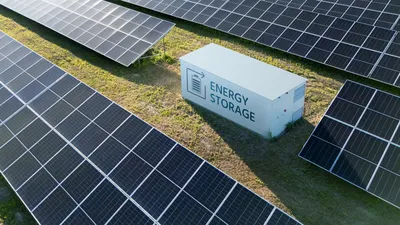
Tesla has signed a long-term power purchase agreement (PPA) with ContourGlobal covering approximately 1 terawatt-hour (TWh) per year of renewable electricity from Project Sterling, a hybrid solar and battery storage project in Arizona, US.
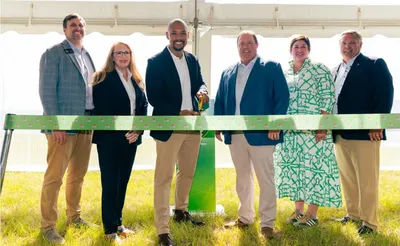
Utility Georgia Power has completed construction of the 49.5MW/198MWh Moody Battery Facility, located outside of Valdosta, Georgia, US.
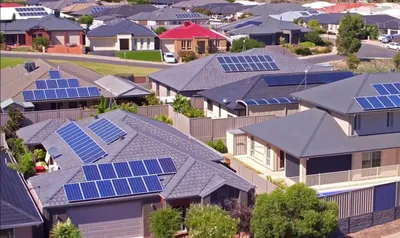
A global survey indicates that 66% of respondents now favor investments in renewable energy and storage systems. This shift in public sentiment is driven by a growing perception that localized solar power enhances energy security and provides greater economic stability compared to traditional fossil fuels.
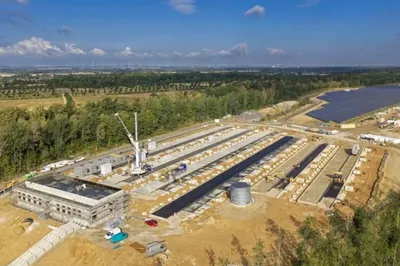
RWE has launched construction on a 236MW/470MWh BESS in Germany, while IPP Kallista has done the same on a 193MW/386MWh system in France, supplied by Envision Energy.
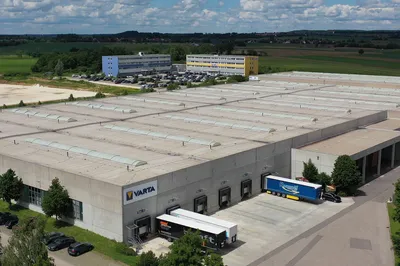
German battery manufacturer Varta has filed for self-administered insolvency, with the proceedings covering its solar-storage and energy management business.
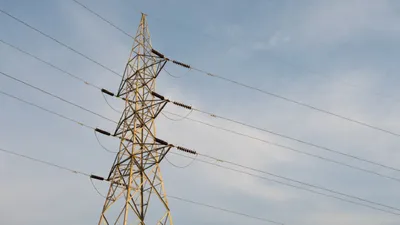
Enexis has secured a €500m ($570m) financing facility from EIB to support its electricity grid investment programme in 2026.
Hitachi Energy and L&T have been awarded contracts by TenneT to deliver two new HVDC grid connections, Nederwiek3 and LanWin5.
Serbia increased its solar capacity by 61 MW during the first half of 2024, bringing the national total to approximately 379 MW. Growth remains driven by the prosumer segment despite ongoing challenges regarding grid connection timelines and permitting hurdles.
ESN Premium speaks with Jason Abiecunas and Mike Wallace of FlexGen, one of a growing number of US BESS companies establishing operations in Europe.
Australia isn’t in the world’s club of car makers anymore, but it can decide which future it chooses and imports.
Italy's Ministry of the Environment and Energy Security has given a positive environmental impact assessment to a planned 599 MW agrivoltaic plant in Puglia, subject to several conditions.
The newest episode of Energy Technology considers how state-sponsored attackers are using cyber espionage to access sensitive mining data.
At The smarter E 2026 in Munich, the company demonstrated its ModulAir® free-air cable hangers for solar projects, as well as its latest 3D locking hangers, which are designed to secure electric cables when used in locations with livestock.
Fraunhofer researchers developed several standardized propane heat pump concepts for retrofitting multi-family buildings after finding that no single system configuration suits every building.
A tender is open in Bhutan for three rooftop solar systems to serve three separate schools. The deadline for applications is August 24.
A huge heavy lift vessels has arrived in Hobart to transport the Tasmania-made Hull 096, the world's largest battery-electric ship, to its new home in South America.
We get behind the wheel of the updated Genesis GV60 for the first time.
Australia needs some more small electric passenger cars. But of many those on offer overseas, only the VW ID.4 seems likely for Australia, and that is far from certain.
The same briefing, in your inbox each morning. Australian energy news, market signals, and policy. No noise.
No spam. Unsubscribe anytime. Choose exactly what you receive
You're subscribed to the daily brief.
Almost there. Check your inbox for the confirmation link.